

How To Do Breast Massage After Augmentation
Breast Cancer: Risk Factors, Symptoms & Handling
When cancerous cancer cells course and abound within a person's breast tissue, breast cancer occurs. Although it is the nearly commonly diagnosed cancer in American women, chest cancer tin can touch people of all genders. The American Cancer Order estimates that over 280,000 women and over 2,700 men will be newly diagnosed with invasive breast cancer in 2022 — and about 43,000 women and 530 men will die from breast cancer.
Here, nosotros'll provide an overview of breast cancer — from the different types to adventure factors, symptoms and treatments — to give yous a ameliorate motion picture of the disease and its impacts.
Types of Breast Cancer
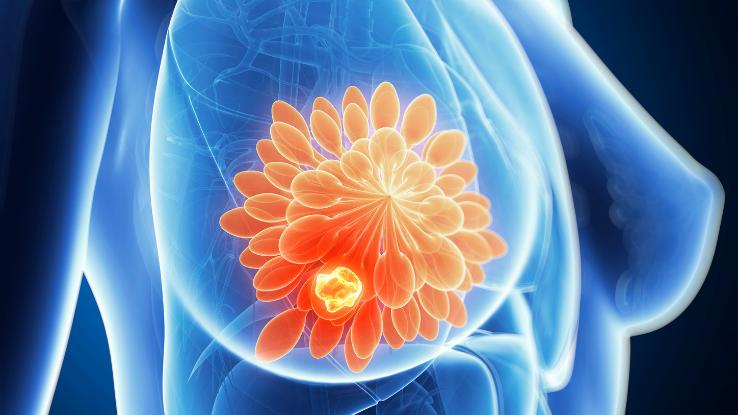
Breast cancer is a malignancy in which the cells of the breast divide and grow at a faster-than-typical charge per unit and can, over time, form tumors in the chest. Without treatment, cancerous tumors can spread to other parts of the body.
While about chest cancers start in the milk ducts, some malignancies grade first in the glandular tissue. Moreover, many tumors abound slowly: it may have equally long as 10 years for a patient to be able to feel the tumor in their breast. Nevertheless, in some instances, the tumor may be ambitious and grow at a much faster step.
What you may non realize is that there are different types of breast cancer. The categorizations refer to the location of the cancer'southward origin and whether information technology's considered invasive or non-invasive. Invasive chest cancer refers to cancer cells that accept traveled from their original location and have invaded surrounding tissue; in later stages, this blazon of cancer may spread to the lymph nodes or one's organs. On the other manus, non-invasive cancers, sometimes referred to every bit "carcinoma in situ," are confined to the bespeak of origin and have not spread to otherwise good for you tissue.
With this in mind, types of breast cancer include:
- Ductal Carcinoma In Situ (DCIS): In this near common form of not-invasive breast cancer, making upward around i in five new diagnoses, malignant cells develop inside the milk ducts and remain in place. Although DCIS is non a life-threatening cancer, it can increase your chances of developing invasive cancer afterwards on.
- Lobular Carcinoma In Situ (LCIS): Like DCIS, LCIS remains within its place of origin and is non-life threatening. LCIS occurs when aberrant cells have adult in the milk-producing glands. LCIS is not idea of as a truthful grade of chest cancer, but an instance of LCIS tin put you at a higher chance for developing breast cancer in the future
- Invasive Ductal Carcinoma (IDC): This form of cancer, sometimes referred to as infiltrating ductal carcinoma, is the virtually mutual form of invasive breast cancer, affecting near eighty% of all patients with invasive breast cancer. IDC begins in the milk ducts but, eventually, the cancer cells will break through the duct walls and attack the surrounding tissue.
- Invasive Lobular Carcinoma (ILC): ILC is the second-near common grade of invasive breast cancer. In an instance of ILC, the cancer cells originate in the milk-producing glands, or lobules, and spread into nearby healthy tissue.
Other rare types of breast cancer include inflammatory breast cancer, angiosarcoma and Paget's illness.
Symptoms Associated With Breast Cancer
In most cases, folks with early on-stage breast cancer won't showroom signs or symptoms. In fact, cancer is often first detected by a routine mammography. Nonetheless, symptoms of breast cancer may include:
- A lump or mass felt in the breast
- An area of thickened tissue in the breast
- A alter in the size of shape of your chest
- Swelling in or around the chest
- Irritation of the skin of the chest
- Dimpling of the skin of the breast
- Rashes on the chest
- Pain in the breast or nipple area
- Changes in the advent of the nipple or surrounding peel.
- Belch from the nipple
- Lump in the underarm area
Changes to the breast or surrounding area may exist related to other medical atmospheric condition. Any unusual changes should exist brought to your medico's attention immediately.
Diagnosis & Investigations
Diagnosis of breast cancer involves a concrete examination by a doctor; use of imaging; and, oftentimes, a biopsy of the abnormal tissue. So, what are the specifics associated with these procedures?
Imaging
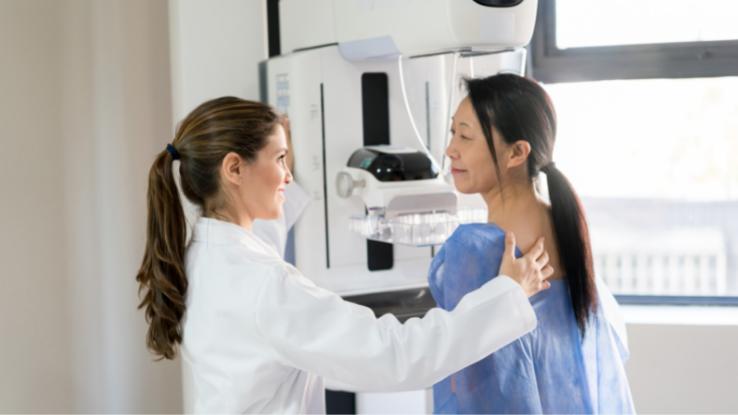
- Mammogram: This procedure uses pocket-sized amounts of x-ray beams to visualize the breast tissue.
- Ultrasound: This procedure uses a pocket-size probe placed on the skin of the breast to see the underlying tissue. Ultrasound may be more than suitable for younger women with breast lumps
Tissue Sampling
- Needle Aspiration: A small needle is used to accept a sample of the aberrant breast cells, or if fluid is present (a cyst), a sample of fluid may be taken
- Needle Biopsy: A small cadre of tissue is removed with a needle, this allows for visualization of the cells
Farther Tests
- Computed Tomography (CT) Scan: May be used to run across if there is prove of spread of chest cancer elsewhere in the body.
- Breast X-Ray: Used to look specifically at the lungs to see if there is whatever bear witness of spread.
- Blood Tests: Used to bank check your blood counts, liver function, kidney function and sometimes to perform genetic testing.
Staging
When diagnosing chest cancer, your physician will try to determine its stage. Staging usually uses the TNM system which takes into business relationship the size of the tumor (T), if information technology has spread to whatsoever lymph nodes (N) and if it has metastasized (Thou).
Tumour Size (T)
- T0 = primary tumor cannot exist seen
- T1 = tumor is ≤ 20mm
- T2 = tumor is > 20mm but ≤ 50mm
- T3 = tumor is > 50mm
- T4 = tumor of whatever size which extends to the chest wall or peel
Nodes
- N0 = no prove of spread to lymph nodes
- N1 = metastases to e.g. 1–3 axillary lymph nodes
- N2 = metastases to e.g. 4–nine axillary lymph nodes
- N3 = metastases to e.1000. ≥ 10 axillary lymph nodes or to infraclavicular lymph nodes
Metastasis
- M0 = no evidence of distant metastasis
- M1 = evidence of distant metastasis
Other factors, such equally which receptors your type of cancer has on its cells, is also ordinarily included in this conception. Those other factors include:
- Man epidermal growth gene-2 (HER2)
- Estrogen (ER)
- Progesterone (PR)
These parameters are oft combined to give an overall "phase" of the cancer:
- Stage 1: The tumor is modest
- Phase 2: The tumor measures 2–5cm, and in that location is bear witness of nearby lymph nodes being affected, notwithstanding in that location is no signs of spread to other places in the body
- Stage three: The tumor measures 2–5cm and there is show that nearby lymph nodes and nearby structures are affected, just at that place is no sign of distant spread
- Stage 4: The cancer has spread to other parts in the body.
Note: This is not an exhaustive list of staging parameters every bit these tin can be much more complicated.
Grading
Grading of breast cancer is a mensurate of how "normal looking" the cells are at the fourth dimension of exam. These grades include:
- G1 = low histological form (favorable)
- G2 = intermediate histological course (moderately favorable)
- G3 = loftier histological grade (unfavorable)
Notation: Low-grade cells look more than normal than high-grade cells.
Screening & Detection
Screening tests have the ability to observe cancer early on — when it'due south most responsive to treatment. As such, people should perform self-breast exams and report whatsoever changes to their doctor.
Moreover, a baseline mammogram is recommended for all women at 40 years old; between the ages of xl to 49, experts recommend that women schedule mammograms every ane to two years based upon earlier results, risk factors, and so on. If any abnormalities are present, your physician may send you for further testing to either diagnose or dominion out cancer.
Causes & Risk Factors
At that place is no definitive crusade for chest cancer, but many chance factors are associated with the disease, including:
- Having a family unit history of breast cancer (e.m. in your mother, sis or aunt)
- Increasing age
- Beingness overweight or obese
- Maintaining an unhealthy diet or lifestyle
- Early menstruum or late menopause
- The utilize of some types of nativity control pills for more x years
- Radiations to the breast to treat another condition at an early on age
- Using hormone replacement therapy
- Smoking

Chest Cancer Treatment
There have been incredible advancements made in the treatment of chest cancer. As a result, the rate of deaths due to breast cancer has been on the decline. Treatment options may include surgery, radiation, chemotherapy and hormonal therapy. Moreover, your treatment programme will depend on the type and phase of breast cancer you have, besides as your medical history and personal preference.
- Surgery: Surgical options include a lumpectomy, which removes only the cancerous tissue and leaves the chest looking normal, and/or a mastectomy, in which the entire chest is removed. Mastectomy and lumpectomy may or may not exist used in conjunction with other treatments, such as radiation.
- Radiation: The procedure of using loftier forcefulness x-rays aimed direct at the cancer cells to kill them.
- Chemotherapy: This process uses drugs to deteriorate or kill cancer cells. Hormone therapy can only be used with certain types of breast cancer, those that are hormone receptor positive.
Integrative and Complementary Medicine
Integrative and complementary therapies can be used in conjunction with traditional medical practices to ease symptoms or ameliorate quality of life. While some complementary therapies have been proven effective, no i should ever use this blazon of therapy in the place of standard medical therapy. Integrative and complementary therapies include, but are non express to, herbal supplements, acupuncture, meditation, massage and psychotherapy.
Prognosis
Prognosis depends on the blazon and stage of chest cancer. Someone diagnosed with either not-invasive or early-stage invasive chest cancer may have a better survival rate than those diagnosed with late-phase and/or invasive cancer. Undoubtedly, stage 4 cancer that has spread to other areas of the body and throughout the lymph nodes has the poorest prognosis.
If you lot take whatever additional questions or concerns regarding breast cancer, contact your healthcare professional.
Resource Links:
- "Cancer Statistics: 2021 Estimates: Chest" via American Cancer Society
- "Breast Cancer" via Medline Plus
- "Chest Cancer" via The American University of Family Physicians
- "Breast Cancer" via Mayo Clinic
- "Chest Cancer" via American Cancer Lodge
- "Assessment of breast mass" via BMJ Best Do
- "Patient Information from the BMJ: Breast Cancer: DCIS" via BMJ Best Practice
- "Breast Cancer" via National Health Service (NHS)
- "National Breast and Cervical Cancer Early Detection Plan" via Centers for Disease Control and Prevention (CDC)
- "Chest Cancer" via Centers for Disease Control and Prevention (CDC)
Source: https://www.thehealthfeed.com/health-conditions/condition-breast-cancer?utm_content=params%3Ao%3D1668962%26ad%3DdirN%26qo%3DserpIndex&ueid=b7ba7050-c259-48a8-bd5a-bfee37a8b888
0 Response to "How To Do Breast Massage After Augmentation"
Post a Comment